
Buying Guides6 min read
Which Generation Is My Car? Build Date, Compliance Plate and Chassis Codes
There is one way to buy the wrong shade set for a car you correctly identified. You know your car is "a 2017 CR-V", you order on that, and the listing you actually needed was the one ending in 2016. Nothing about the year was wrong. It was the wrong year to be using.
Shade patterns are cut per generation, and a generation changes on a build date, not on the 1st of January. So before you order anything for your car — from us or anyone — it is worth five minutes with the car itself. This page is about the evidence on the vehicle: the plate, the VIN and the chassis code. If you already know your generation and want to find the listing it sits under, that is a different question and it has its own guide.
Model year is a sales label. Build date is a fact.
A "2017 model" can be a car built in October 2016 and sold in February 2017. New generations are usually released mid-year, so cars sold in the changeover year can be either side of the line. The year on the registration papers tells you when the car was first registered in Australia. It does not tell you which body shell you have.
The car itself carries the answer.
The build plate / compliance plate. On most vehicles delivered in Australia there is a metal or foil plate carrying the build month and year, usually somewhere on the firewall under the bonnet, on the driver's door jamb, or on the door itself. On newer cars the compliance information may be printed on a label in the door aperture rather than riveted on. Open the driver's door, look at the frame and the edge of the door, then check under the bonnet.
The VIN. Seventeen characters, on the plate, on the door jamb label, usually also visible through the base of the windscreen from outside and on your registration papers. The tenth character is a model-year code on most manufacturers, and the VIN as a whole is what a dealer parts desk uses to identify the exact build. If the plate is unreadable — sun-baked plates are common on older utes and 4WDs — a dealer or your service history can decode the VIN for you.
The service history. The first service stamp gives you an outer bound on the build date, and a workshop invoice will often list the model code.
Chassis codes: the identifier that actually matches a pattern
Manufacturers give each generation an internal code. Enthusiast forums, parts suppliers and importers all use it, and it is far more precise than a year. Where those codes are the common way an Australian owner talks about the car, they appear in our listings too:
| Vehicle | Codes you will see | How our list is split |
|---|---|---|
| BMW 320i | E90, F30, G20 | E90 2005–2011, F30 2012–2019, G20 2019–2025 |
| Nissan X-Trail | T30, T31, T32 | T30 2001–2007, T31 2007–2013, T32 2014–2022 |
| Mitsubishi Pajero | V43, V45, V73, V93 | four separate listings, V73 2000–2006 and V93 2015–2019 among them |
| Toyota LandCruiser | LC80, LC100, LC200, LC300 | LC80 1990–1999 through LC300 2022–2026 |
| Toyota HiLux | Vigo, Revo, AN120/AN130 | 2007–2015, listed as Vigo, 2015–2018, listed as Revo, 2019–2025, listed as AN120/AN130 |
| Kia Sportage | QL | Sportage 2017–2022 |
| Volkswagen Tiguan | AD1 | Tiguan 2009–2017 |
| Ford Ranger | T6 | Ranger 2014–2021 |
| Isuzu D-Max | RG | D-Max 2021–2025 |
| Mazda CX-5 | KF | CX-5 2017–2026 |
| Toyota Camry | XV70 | Camry 2018–2024 |
| Honda CR-V | RW1 | CR-V 2017–2022 |
| Mercedes C200 | W203 | C200 W203 2000–2007 |
| BMW X6 | E71 | X6 E71 2008–2014 |
If you know your code, you are done — search it and the listing will name it. Every product page carries its own year range, so you can confirm the match before you buy.
Facelifts are the trap, not full model changes
A full generation change is obvious: different car. The one that catches people is the mid-life facelift, where the body shell stays and the lights, bumpers and sometimes the door glass shape change. Our list splits where the fit changes, so a facelift sometimes gets its own row and sometimes does not.
Mazda is the clearest example. The 2009–2014 Mazda 3 is carried as a "Smile facelift" listing, and split again by body — sedan and hatchback. Two cars that look the same age to most people, two patterns.
The four-generation check, using a car most Australians know
The Honda CR-V has been sold here continuously through four of the generations we cut. Each one is a separate pattern:
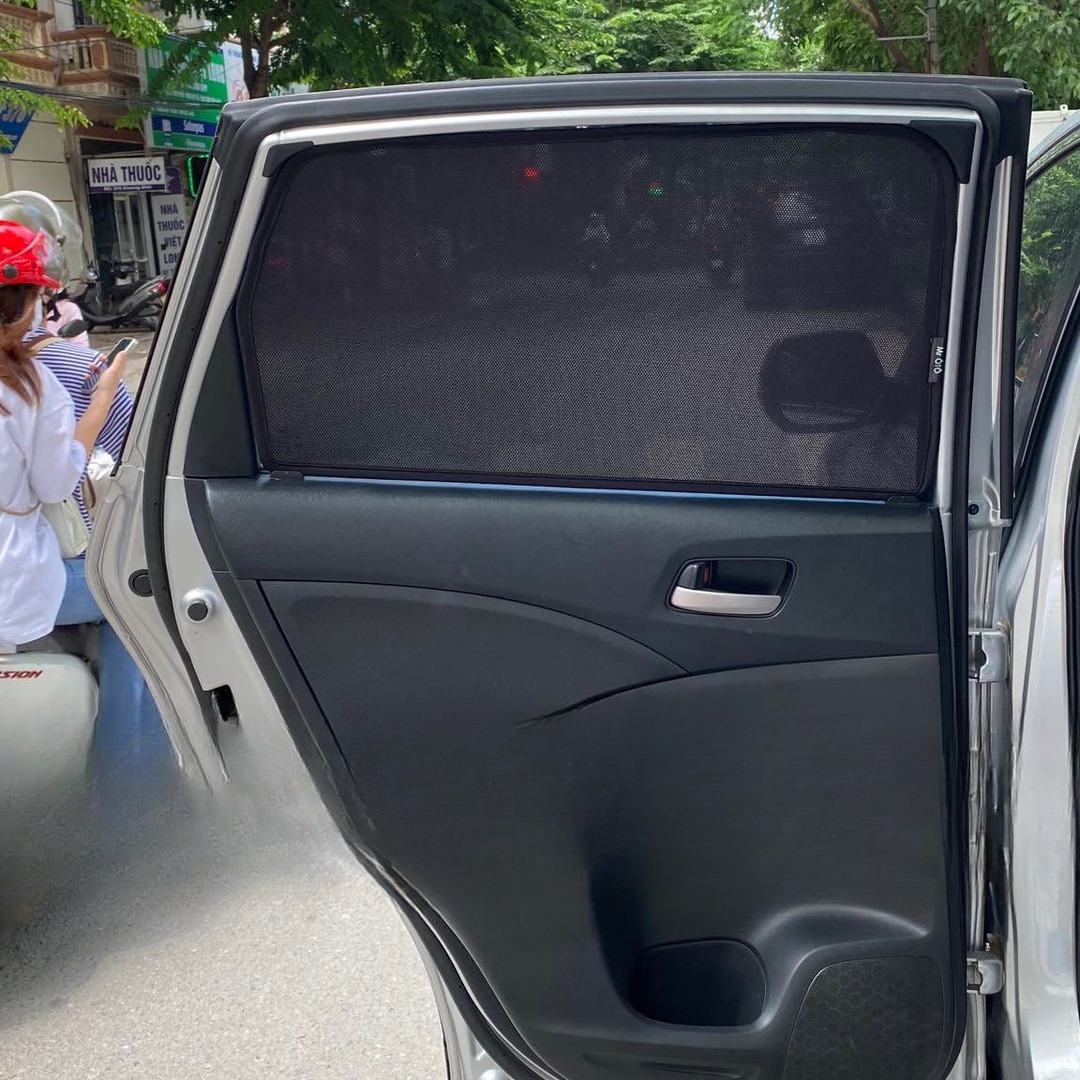
Note that 2012 appears twice. That is not an error: where two ranges overlap, the changeover fell inside that year, so a car sold as a 2012 could be either side of it. If your year sits on a boundary like that one, the build date is what decides it, and there is a separate guide to boundary years and overlaps.
What to write down before you order
- Build month and year, from the plate or door-jamb label — not the year on the rego papers.
- Body style: sedan, hatchback, wagon, dual cab, and how many rows of seats.
- The chassis code, if the car has one people use.
- Whether anything about the rear glass is non-standard — aftermarket window bars, a fitted cargo barrier, a roof rack leg that sits in the door aperture.
With those four things you can match a listing with confidence, whoever you buy from. Generation settles which shade fits; if you are still deciding what kind to buy, we tested the options side by side in the best car sun shades in Australia. Every Auto Sunshades listing states the generation it was cut for. Year range, body style and alias names are on every product page — start at all products and check the range against your build date rather than your model year.
If the plate is gone and the VIN will not decode, ask before you order. A wrong generation is a return, and the build date is the only thing that settles it.
Once you know your generation
Shade sets are cut per generation, which is exactly why the build date matters. Jump straight to the model pages for the most common Australian cars:
- Toyota RAV4 · Toyota HiLux · Ford Ranger · Mazda CX-5
- Hyundai Tucson · Kia Sportage · Mitsubishi Outlander · Subaru Forester
Each page lists the year ranges we cut, so you can match the build date you just found.
Ready to fit yours?
Custom-fit sun shades, made to your car's exact windows.
Can't find your car? Message your car model on WhatsApp