
Buying Guides7 min read
Mitsubishi Window Shades Australia: All 25 Fits, and the Pajero That Isn't a Pajero Sport
Mitsubishi is one of the deepest makes in the Auto Sunshades cut list: 25 fits, from a 1991 Pajero to a 2026 Triton. It is also the make where the model name on your registration paper is least likely to match the name on the listing. Two vehicles called Pajero are not the same vehicle. The ASX is filed under a different name entirely. And two Triton listings both claim 2015.
This page is the fitment index. Every shade set starts at from $49.99, so the decision is never about price — it is about picking the right cut.
Pajero and Pajero Sport are two different cars
This is the single most common mis-order on the make. They share four letters and nothing else that matters to a window shade.
Pajero is the ladder-frame wagon, and we cut it by Mitsubishi's chassis code rather than by marketing year:
| Listing | Years | Product |
|---|---|---|
| Pajero V43 | 1991–1999 | /products/mitsubishi-pajero-v43-1991-1999 |
| Pajero V45 | 1994–1999 | /products/mitsubishi-pajero-v45-1994-1999 |
| Pajero V73 | 2000–2006 | /products/mitsubishi-pajero-v73-2000-2006 |
| Pajero V93 | 2015–2019 | /products/mitsubishi-pajero-v93-2015-2019 |
The V93 listing also carries the Montero and Shogun aliases, which is what the same wagon is called in other markets — worth knowing if you are cross-referencing an overseas parts forum.
Say it plainly: there is no Pajero cut for 2007 to 2014. The V73 listing stops at 2006 and the V93 listing starts at 2015. If you own a Pajero from that window, nothing on this list is cut for it, and we would rather tell you that than sell you a V73 set and let you discover it in the driveway.
Pajero Sport is the separate, Triton-based wagon, and it has continuous coverage:
| Listing | Years | Aliases | Product |
|---|---|---|---|
| Pajero Sport | 2009–2017 | Challenger | /products/mitsubishi-pajero-sport-2009-2017 |
| Pajero Sport | 2018–2025 | Montero Sport, Shogun Sport, Challenger | /products/mitsubishi-pajero-sport-2018-2025 |
The Challenger alias matters in Australia specifically: that is what the 2009–2015 car was badged here before the Pajero Sport name arrived. If your rego says Challenger, the 2009–2017 listing is yours. There is a vehicle page with the full breakdown at /sun-shades/mitsubishi-pajero-sport.
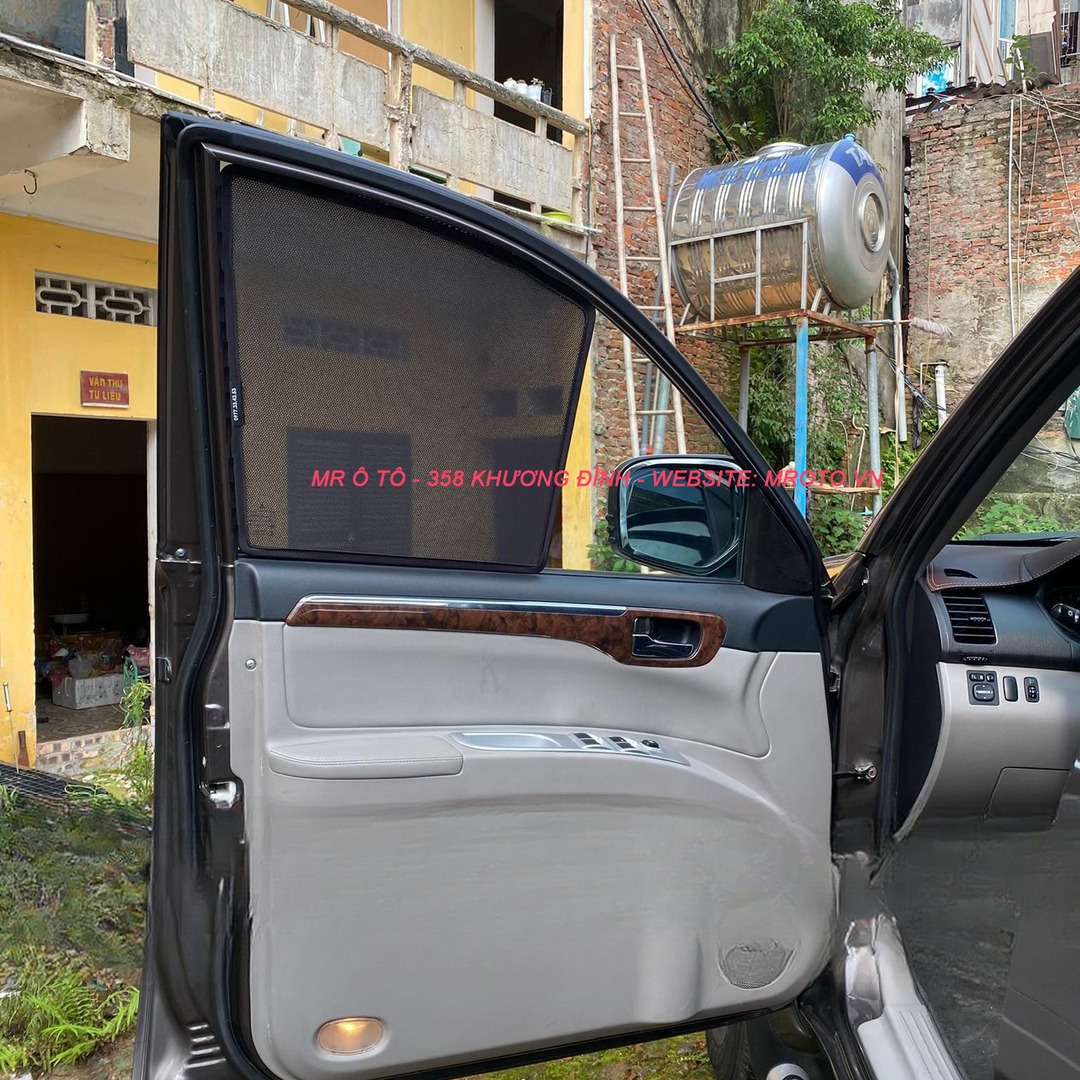
Triton: four cuts, and the 2015 overlap
The Triton is our most finely-split Mitsubishi, because the cabin changed shape three times in fifteen years.
| Listing | Years | Aliases | Product |
|---|---|---|---|
| Triton | 2008–2015 | L200 | /products/mitsubishi-triton-2008-2015 |
| Triton | 2015–2018 | L200 | /products/mitsubishi-triton-2015-2018 |
| Triton | 2019–2023 | Triton MQ, Triton MR | /products/mitsubishi-triton-2019-2023 |
| Triton | 2024–2026 | L200 | /products/mitsubishi-triton-2024-2026 |
Two things to note. 2015 appears in two listings — the old shape ran into that year and the new one started in it, so a 2015-build ute sits on the boundary. If yours is a 2015, do not order on the plate year. The compliance plate carries the series code (MN for the older cab, MQ for the newer), and that is the thing to match. If you would rather check the glass itself, the measuring guide walks through it.
Second, the MQ and MR aliases sit on the 2019–2023 listing, not on separate products. Australian Tritons carry those series codes on the compliance plate, and both fall inside that one cut.
Full Triton fitment lives at /sun-shades/mitsubishi-triton.
The ASX is listed as the Outlander Sport
If you search our catalogue for "ASX" you will land on a product whose slug reads mitsubishi-outlander-sport. That is not an error and it is not a different car. Outlander Sport is the North American name for the ASX, RVR is the Japanese one, and the listing carries both aliases: /products/mitsubishi-outlander-sport.
It sits alongside — not inside — the Outlander listing, which is the larger seven-seat wagon: /products/mitsubishi-outlander, with the vehicle page at /sun-shades/mitsubishi-outlander.
Neither of these two is split by year. They are single cuts covering the nameplate, so check the product page for the fitment note against your build rather than assuming a generation split exists.
Lancer, Mirage and Attrage
The small cars are where the year splits get tight.
| Listing | Years | Notes | Product |
|---|---|---|---|
| Lancer | 2000–2003 | /products/mitsubishi-lancer-2000-2003 | |
| Lancer Gala | 2003–2005 | /products/mitsubishi-lancer-gala-2003-2005 | |
| Lancer | single cut, no year split | /products/mitsubishi-lancer | |
| Mirage | 2010–2017 | Space Star | /products/mitsubishi-mirage-2010-2017 |
| Mirage | 2018–2021 | Space Star | /products/mitsubishi-mirage-2018-2021 |
| Attrage | single cut, no year split | Mirage G4 | /products/mitsubishi-attrage |
Two honest gaps. There is no Mirage cut past 2021 — the two dated listings end there. And the Attrage is the sedan version of the Mirage, sold as the Mirage G4 in some markets; because it is a boot-and-C-pillar car rather than a hatch, its rear-door glass is a different shape and the hatch cuts do not transfer. If you have the sedan, the Attrage listing is the one.
The CJ-era Lancer that Australia bought in enormous numbers from 2007 is not covered by either dated listing. There is a single un-dated Lancer cut; check that product page against your car rather than assuming. The older sedan guide goes through all three Lancer listings and what their photos show.
Listed by nameplate, one cut, no year split
These have a cut, but the catalogue does not split them by generation. Treat the product page as the source of truth for what body it was cut against:
| Model | Product |
|---|---|
| ASX / Outlander Sport / RVR | /products/mitsubishi-outlander-sport |
| Outlander | /products/mitsubishi-outlander |
| Lancer | /products/mitsubishi-lancer |
| Attrage | /products/mitsubishi-attrage |
| Grandis | /products/mitsubishi-grandis |
| Destinator | /products/mitsubishi-destinator |
| Jolie | /products/mitsubishi-jolie |
| Xforce | /products/mitsubishi-xforce |
| Xpander | /products/mitsubishi-xpander |
| Xpander Cross | /products/mitsubishi-xpander-cross |
| Zinger | /products/mitsubishi-zinger |
A few of those nameplates will be unfamiliar to an Australian buyer — the cut list is built from the manufacturer's fitment data across markets, and models that were never a mainstream sale here are still on it. That is a reason to check the product page carefully, not a reason to assume the cut is wrong.
What a set actually covers
Every set on this page is cut for glass you can roll down or open: front doors, rear doors, and depending on the vehicle, the boot or tailgate glass, the third-row quarter windows on the seven-seaters, and the small fixed port window behind the rear door. There is no windscreen piece in any of these sets — a windscreen product is a different category, and if that is what you are after, our windscreen guide covers what works there.
On the seven-seat Mitsubishis — Outlander, Grandis, Pajero Sport, Xpander — the third row and the port window are the pieces most often left out of a generic kit, and they are the ones doing the work when a child is sitting in the back third of the car on a February afternoon.
Choosing quickly
- Pajero or Pajero Sport? Ladder-frame wagon with the side-hinged spare on the tailgate is the Pajero — go by chassis code (V43/V45/V73/V93). Ute-based wagon, or badged Challenger here, is the Pajero Sport.
- Triton? Find your series code (MN, MQ, MR) or check the rear door glass shape if you are on the 2015 boundary.
- ASX? Order the listing named Outlander Sport.
- Nothing matches your years? Say so before you order. The gaps on this page — Pajero 2007–2014, Mirage after 2021 — are real, and a set cut for the wrong generation is worse than no set.
If you are cross-shopping, our comparison with Snap Shades lays out where each brand's Mitsubishi coverage actually sits, and the alternatives round-up is the wider view.
Ready to fit yours?
Custom-fit sun shades, made to your car's exact windows.
Can't find your car? Message your car model on WhatsApp