
Buying Guides7 min read
Rideshare and Uber Car Window Shades in Australia
If you drive rideshare, the back seat is the part of the car your customers actually sit in. You spend the shift up front with the air-con vents on your face. They get the rear door glass, and on a hot afternoon that glass is where the sun comes in.
This page is for drivers who use their own car as a workplace. It covers which windows are worth shading when you're carrying passengers all day, what we cut for the cars that turn up on rideshare most often, and how to look after a set that gets handled a lot more than a family car's. If privacy is your main reason, we've covered mesh against blackout and tint in the privacy guide. This one is about the job.
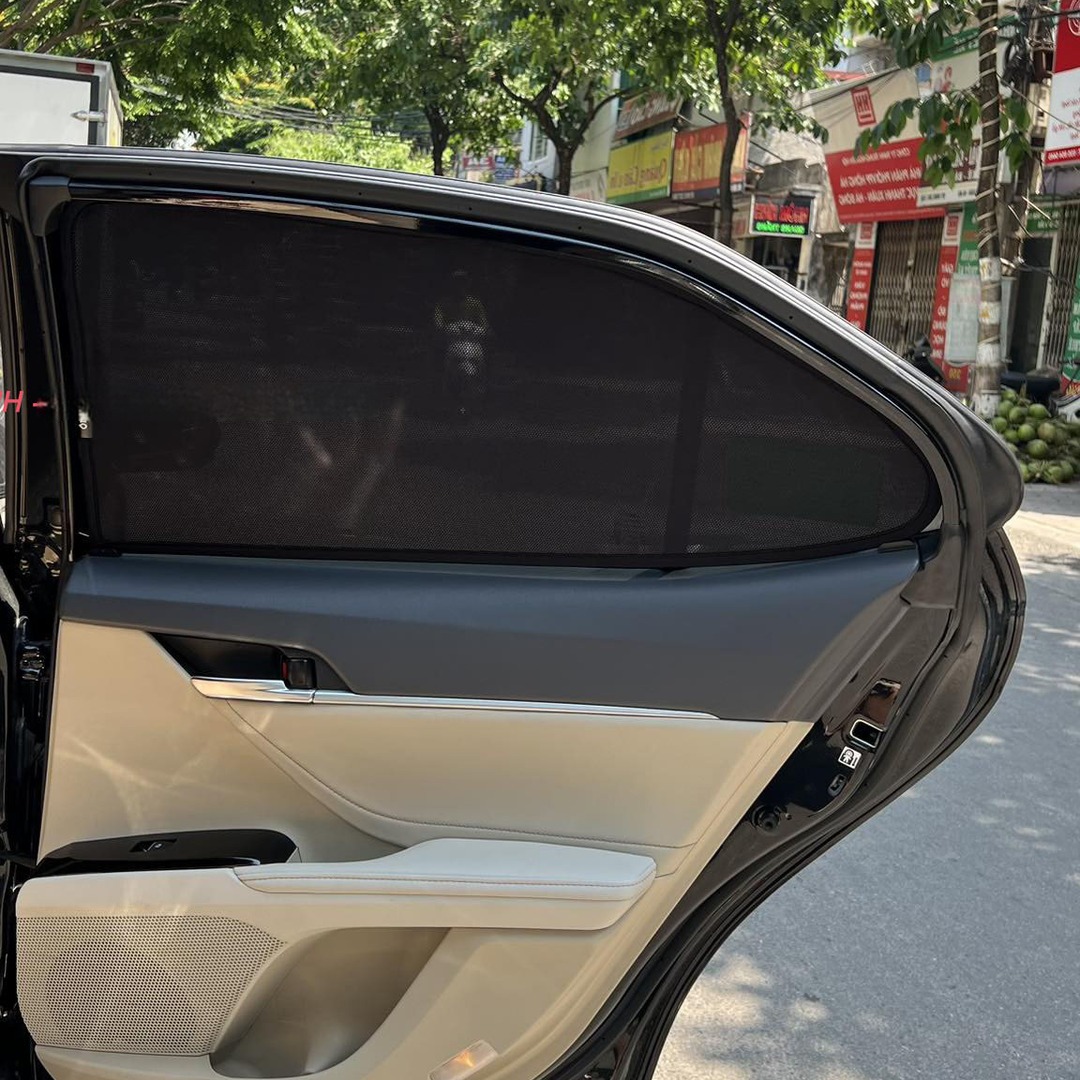
What a passenger notices
Most people get in, check their phone and get out. The ones who notice the car notice small things: a seat that's too hot to sit on, sun across the screen they're trying to read, or feeling like they're on display at the lights with a stranger in the next lane looking straight in.
Mesh on the rear doors helps with all three. It cuts glare and some of the heat through the glass, and from the street it's harder to see who's sitting in the back. Your passenger can still see out, which matters more than you'd think. People like to watch where they're being taken, especially at night in a suburb they don't know.
It also makes the back of an ordinary Camry or Corolla look a bit more looked-after. Shades fitted to the shape of the window read as part of the car. A suction-cup panel with a gap round the edge reads as something you grabbed at a servo.
Rear glass only while you're driving
This is the part that matters for anyone on the road all day.
Shades on the rear door windows are generally fine while driving in every state. The front side windows and the windscreen must be clear whenever the car is moving. We've set out the detail state by state in are car sun shades legal in Australia, including the condition for the rear windscreen: if it's covered, you need working exterior mirrors on both sides.
For a rideshare car that works out like this:
- Rear door pair: on the car for the whole shift. This is the set that does the work for passengers.
- Front pair: for when you're parked between jobs, in an airport holding area or waiting out a quiet patch in the sun. Off before you pull away. They live in the door pocket, not on the glass.
- Rear windscreen or boot glass: optional. On a sedan you're reversing and changing lanes all day, so you may well want every bit of rear view you can get. It's legal with two mirrors, but it's your call.
Plenty of passengers in Australia still sit up front, which is one more reason the front pair stays off while you're working. Nothing goes on the front side glass with the car moving.
Platforms and state regulators set their own vehicle standards for point-to-point work, and we don't speak for any of them. Before you fit anything, check your platform's current vehicle requirements and your state's rules for commercial passenger vehicles. We're not saying any platform approves or allows shades.
The cars we cut that you'll see on rideshare
These are cars we have patterns for. If you drive one of them, here's what's available. Prices are the same across most listings: front pair $49.99, rear door pair $59.99, front and rear four-piece $99.99.
Toyota Camry. We cut every Camry from the 2012–2017 car through the 2018–2024 sedan to the current 2025–2026 model, and all three hold on magnets. The 2018–2024 Camry set is the one in the photo above, with deep rear doors that leave little bare glass once the shade is on. The 2025–2026 Camry is doors only for now, and we don't have workshop photos of it yet. Older Camrys are listed separately.
Toyota Corolla. Sedan only. We don't cut the Corolla hatch. The Corolla page lists the sedan years we cover. If you're unsure which body you have, send us a photo of the rear door before ordering.
Toyota RAV4. The 2019–2025 RAV4 comes in front, rear and four-piece sets. The RAV4 hub has the earlier bodies too, and there's a model guide if you want the detail.
Kia Carnival. The 2020–2026 Carnival is the one to have if you do larger groups and airport runs. We cut the sliding doors, the third-row side windows and the tailgate, so you can shade the second and third rows separately. The third-row pair is $49.99. If the back row is folded flat for luggage most of the time, skip it.
MG ZS and MG HS. Both hold on magnets, with front, rear and boot options. See the MG ZS page and the MG HS page.
BYD Atto 3. Front, rear and boot glass, listed as the Atto 3 set. Stock on the Atto 3 moves around, so check the product page for what's in before you order.
Toyota Kluger. We cut the 2014–2020 Kluger right through: doors, the quarter glass beside the third row, and the tailgate. We also cut the 2008–2014 car, doors only. We don't cut the Kluger from 2021 on yet.
We also cut the 2021–2025 Kia Sorento and the 2021–2026 Hyundai Tucson (both magnetic), plus older Camrys, Corollas and RAV4s. We don't have patterns for the Tesla Model 3 or Model Y, the Prius or the Ioniq. If your car isn't listed, there's no point ordering a "close enough" set. The shape is the whole product.
Handling a set every day
A family car's shades go on in November and mostly stay there. A rideshare car's get bumped by bags, leaned on by passengers and pulled off to clean the car. A few habits help.
Leave the rear pair on. The less a shade comes on and off, the less it gets handled. Since the rear doors are fine while driving, there's no reason to take them off at the end of a shift.
Take them off for motorway work. Our listings say the shades hold in normal driving and recommend removing them at highway speeds. On a long freeway airport run, pull the rear pair off before you set out and put them back when you're back in town.
Store the front pair flat. They come out at every long wait, so give them a spot in the door pocket or under a seat where nothing heavy sits on them. A bent shade won't sit flush.
Windows down is fine. The Camry, MG and Tucson sets hold to the steel door frame rather than the glass, so a passenger can drop the window and the shade stays where it is. The listings say it still keeps out sun, dust and insects with the window down.
Clean the car with them off. Pull them before you wipe the door cards and glass so you're not dragging a cloth across the mesh.
Sun on short trips
A trip is often short, but your passengers keep changing and the rear doors are in the sun all day. Cancer Council Australia says sun protection is needed whenever the UV index is 3 or above, and a back seat beside sunny glass is not exempt (Cancer Council: UV index). We cover what car glass does and doesn't block in the UV protection guide. We won't put a percentage on the shades because we haven't measured one.
Choosing a set
Start with the rear door pair for your exact model and year. That's $59.99 on most cars and it covers the seats your passengers use. Add the front pair if you spend a lot of time parked in the sun between jobs, and treat it as a parked-only set. On a Carnival or Kluger, add the third-row or quarter glass only if people actually sit back there. If you're not sure which year your car counts as, this generation guide sorts it out, or send us a photo of the rear door and we'll tell you which set fits.
Ready to fit yours?
Custom-fit magnetic sun shades, made to your car's exact windows.
Can't find your car? Message your car model on WhatsApp