
Buying Guides8 min read
Summer Car Heat by State: Where Window Shades Help
Every year around October the questions we get start to change. In winter people ask about privacy and glare off a low sun. From then until about March it's heat: a seat that burns the back of a kid's legs, a buckle you can't hold, a dog panting in the back.
Summer isn't the same problem everywhere, though. A January afternoon in Perth and one in Hobart ask very different things of a car. Here's what each part of the country looks like in the Bureau of Meteorology's long-term averages, where side window shades earn their place, and where they don't.
This page doesn't repeat the glass and UV detail. That's in Do car windows block UV?, and the road rules are in Are car sun shades legal in Australia?.
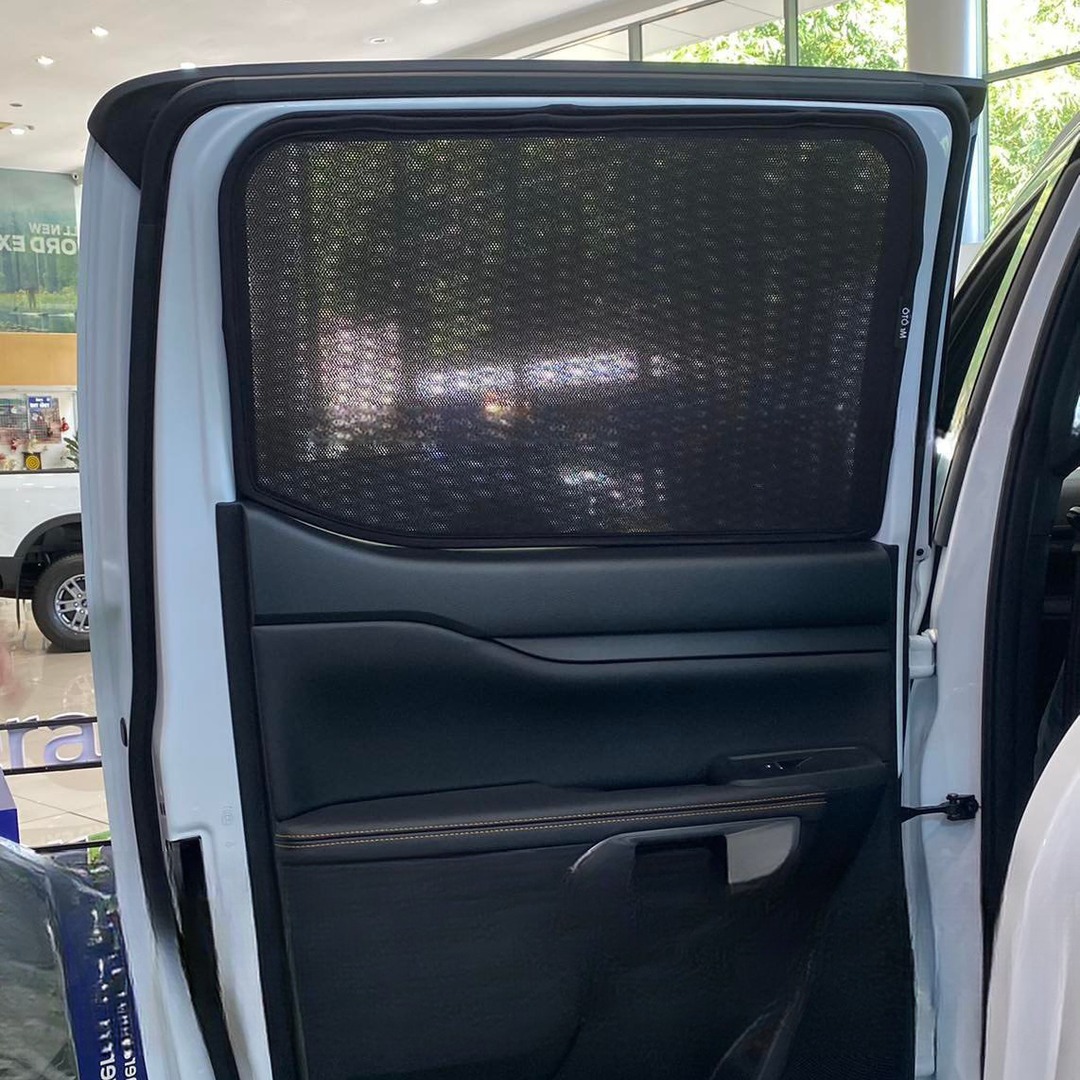
What a side shade does in summer, and what it doesn't
A shade on the rear door glass stops direct sun landing on the person, the seat and the buckle beside that window. It also cuts glare, and it adds a layer over glass that lets a fair bit of UVA through. Cancer Council Australia's fact sheet on tinted windows says tempered side glass lets through substantially more UVA than a laminated windscreen, with estimates as high as 79%. It also says fabric side window covers can give shade and UV protection, that the amount varies by product, and that they only work with the window closed.
What a shade does not do is make a parked car safe. Kidsafe SA's hot cars fact sheet puts the inside of a parked car at 20 to 30°C hotter than the outside air, with most of that rise in the first five minutes. Shading the side glass slows one part of that. Never leave a child or a pet in a parked car, shaded or not.
Two more limits. The front side windows are for a parked car only, so take that pair off before you drive. And a side shade does nothing for the windscreen, which is where most of the heat comes in when the car is parked nose to the sun. That's a windscreen shade job.
The numbers, capital by capital
These are January averages from the Bureau's climate statistics for one long-running station in each capital. They're averages, so the bad days are worse.
| State | BoM station | January mean max | January sunshine |
|---|---|---|---|
| QLD | Brisbane | 30.4°C | not recorded at this station |
| NT | Darwin Airport | 31.8°C | 5.7 hours a day |
| WA | Perth Airport | 31.9°C | 11.6 hours a day |
| SA | Adelaide (Kent Town) | 29.6°C | 10.5 hours a day |
| NSW | Sydney (Observatory Hill) | 26.0°C | 7.1 hours a day |
| VIC | Melbourne Regional Office | 25.9°C | 9.0 hours a day |
| TAS | Hobart (Ellerslie Road) | 21.8°C | 8.0 hours a day |
UV is the other half. ARPANSA and Cancer Council's January 2026 statement says the UV Index is at its worst in January, when average forecasts are 11 or more across most of the country on clear days, and that sun protection is needed whenever it reaches 3. That line covers Hobart as much as Darwin.
Queensland
Brisbane averages 30.4°C in January, and the afternoons are humid. The Bureau has 3pm humidity at 57%. Queensland also skips daylight saving, so at the same clock time the afternoon sun is lower than it is across the border.
If you drive a dual cab, the back seat sits bolt upright beside the rear door glass, so the rear door pair is where we'd start. The current Ranger (2022 on) and HiLux (2019 on) sets are rubber mounted and include a panel for the rear cab window. The dual cab ute guide goes through each one.
Northern Territory
Darwin is the odd one out. January isn't its hottest month. The Bureau's figures have October and November at a 33.4°C mean max, the build-up, while January sits at 31.8°C with only 0.6 clear days and 5.7 hours of sunshine. The wet brings cloud.
Cloud fools people. ARPANSA's point is that UV can still be high on cool or overcast days, and that you can't judge it by clear skies or heat. In the Top End a shade is less about stopping a sunbeam and more about cutting glare and keeping the UV down through the side glass, on every trip, all year.
Western Australia
Perth Airport gets 11.6 hours of sunshine a day in January, the most of any station in the table, with a 31.9°C mean max and 18 clear days in the month.
WA distances are long, and on a long trip a passenger sits beside the same window for hours. For touring rigs like the LandCruiser and Prado, we'd cover the rear doors first, then the tailgate glass if you carry food, water or a fridge in the back. The LandCruiser guide by series sorts out which cut fits which car.
South Australia
Adelaide (Kent Town) runs 29.6°C in January with 10.5 hours of sunshine, and it's dry, with 3pm humidity averaging 36%. If you have little ones, check the buckle with the back of your hand before you clip them in, every time, shade or no shade.
New South Wales
Sydney's Observatory Hill reads 26.0°C in January, but it's a harbourside station. If you live out west, you already know your afternoons are hotter than that. Humidity is high on the coast, with 62% at 3pm.
A rear door pair is the usual starting point. On SUVs like the RAV4, the small quarter glass behind the rear door is the second window people add, because the late sun gets in there behind a booster seat.
Victoria
The Melbourne Regional Office averages 25.9°C in January with 9.0 hours of sunshine. The average hides how Melbourne behaves: mild days, then a scorcher, then a cool change. That's the case for shades you leave on the car, because the one you have to remember is in the boot on the hot day. Victoria is also where the ARPANSA warning matters: a mild day can still carry a high UV reading, so the shade is still doing something for the people in the back.
Tasmania
Hobart averages 21.8°C in January, so glare, privacy and UV matter more than heat. It still gets 8.0 hours of sunshine a day in January, and the ARPANSA advice to use sun protection whenever the UV Index hits 3 doesn't make an exception for a cool afternoon.
If you're in Tassie, a see-through mesh on the rear doors is plenty. Blackout panels are more than most people need here.
Hot seats and buckles: the passenger problem
The driver has the air vents and a windscreen with laminated glass. The kids in the back get a side window, the afternoon sun and a black seat. For them the problem is usually the buckle and the seat, not the air temperature.
A few things help:
- Shade the rear door glass when you park, not just when you drive. The seat and buckle heat up in the car park, so that's when the shade is doing the most.
- Mesh for the trip, so kids can still see out. Blackout is darker but turns the back seat into a cave. Mesh cuts the glare and still lets them look out. The baby shade guide covers the trade-off for younger children.
- Keep the glass up for UV. Cancer Council notes covers only protect against UV with the window closed.
- The same goes for the dog. Our pet shades guide covers dogs in the back seat and the cargo area.
Which windows to cover for summer
Most people need fewer panels than they think. On our listings the rear door pair is $59.99. The front pair is $49.99 and is for parking only. Quarter or third-row glass is $49.99 where the car has it. On the cars we cut it for, the tailgate glass is $59.99 alone or $108.99 with the rear doors.
- City commuting with passengers: rear doors.
- Family SUV with a booster in the back: rear doors, plus the quarter glass if the sun gets in behind the door. Which car windows to shade goes through how to tell.
- Touring or towing in a 4WD: rear doors and tailgate glass. The Everest and the LandCruiser 200 and 300 have third-row glass too, if that row is in use.
- Ute with a back seat: rear doors, and the rear cab window where we cut it. The D-Max is door pairs only.
Every set is cut for one generation of one car. If you're not sure which listing is yours, Which generation is my car? explains how to check, or send us a message.
Questions we get around this time of year
Will shades keep my car cool in the car park? Cooler in the shaded spots, yes. Cool, no. The seat and buckle behind a shaded window stay more comfortable to touch. The cabin as a whole still heats up, and Kidsafe SA's 20 to 30°C figure still applies.
Do I need shades in Melbourne or Hobart? For heat alone, less than in Perth or Brisbane. For UV and glare on the people in the back, yes. ARPANSA's advice is to use sun protection whenever the UV Index is 3 or above, whatever the temperature.
Can I drive with the front shades on? No. The front side windows are for a parked car only. Rear side windows are a different matter. Our legal guide has the detail for each state.
If most of your summer driving is the afternoon pick-up, the school run guide goes through which rear door catches the 3pm sun.
Ready to fit yours?
Custom-fit magnetic sun shades, made to your car's exact windows.
Can't find your car? Message your car model on WhatsApp