
The i30 is the small Hyundai we sell most of, and nearly every set goes on the rear doors. Six GD rear pairs or four-door sets have gone out since June, and the three most recent were all the rear pair alone. That matches what the car is for: a small hatch with a child seat behind the driver, parked outside, driven home into the afternoon sun.
There are four i30 bodies we cut and one, the current hatch, that we do not. Here is how they map.
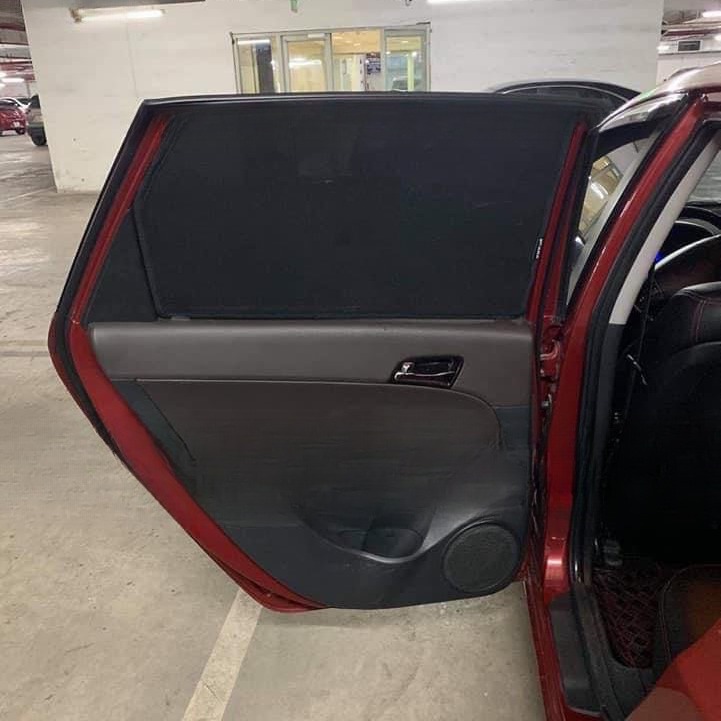
The four i30 cuts
| What you have | Hyundai's code | Build years | Windows we cut | Product |
|---|---|---|---|---|
| First i30 hatch | FD | 2007–2012 | Front and rear doors | i30 2007–2012 |
| First i30 wagon | FD (cw) | 2007–2012 | Doors and tailgate | i30 CW Wagon |
| Second i30 hatch | GD | 2012–2017 | Front and rear doors | i30 GD |
| Current i30 Sedan | CN7 | 2021 on | Doors and rear windscreen | Elantra 2021–2025 |
Door pairs are $49.99 for the front and $59.99 for the rear, or $99.99 for all four. The wagon's tailgate panel and the sedan's rear windscreen panel are $59.99 each, $108.99 with the rear doors, or $154.99 with all four doors. The Hyundai i30 page lists the hatches and the wagon.
Why the GD listing's address says 2013–2019
The GD page lives at an address ending in 2013-2019, which is the range it was first listed under. The car it is cut for is the GD hatch, built from 2012 to 2017, and the listing now says so. Hyundai sold GD run-out stock into 2018, so a car registered in 2018 can still be a GD, which is the only sense in which the old numbers were right. Go by the body, not the address. The GD and the PD that replaced it look different enough from the side that a photo settles it, and if you are not sure, the build month on the compliance plate decides it. There is a longer guide to build dates and generations if you want the method.
The i30 Sedan is an Elantra
From 2021 Hyundai Australia renamed the Elantra sedan the i30 Sedan. It shares nothing with the hatch behind the front doors; it is a separate car, the CN7, and our listing for it carries the global name, Elantra 2021–2025. If you have a 2021-on i30 Sedan or an i30 Sedan N, that is your set. The earlier Elantra, sold here under its own name from 2017 to 2020, has its own listing too, and both carry the rear windscreen panel.
The one we do not cut: the PD hatch, 2017 on
The current i30 hatch, the PD, launched here in 2017 and was facelifted in 2020. It is the i30 most people are driving and we do not have a cut for it, nor for the i30 N or the Fastback. The GD set will not do; the door apertures are different, and a near miss on a magnetic panel is a panel that lifts at the first bump. If you have a PD, the measuring app gets you a quote, and it is the i30 we are asked for most often, so it is on the list.
The wagon's tailgate
The FD-era i30 CW is the only i30 we cut a tailgate panel for, and it is the one wagon owners should look at first. The load area is where the dog rides and where the shopping sits while the car is parked, and a wagon's tailgate glass is big and close to flat. The rear doors plus tailgate set at $108.99 covers the whole back of the car.
Ordering
Hatch or sedan first, then the year. GD hatch 2012–2017 takes the GD listing, FD hatch or wagon 2007–2012 takes the FD listings, a 2021-on i30 Sedan takes the Elantra 2021–2025 listing, and a 2017-on hatch is one we cannot help with yet. The rear pair is the right place to start for almost everyone; the guide to choosing which windows to cover explains why. The full Hyundai list covers the other 40-odd Hyundai fits.
Ready to fit yours?
Custom-fit magnetic sun shades, made to your car's exact windows.
Can't find your car? Message your car model on WhatsApp