
Most Yaris sets we send go on the rear doors. Three 2013–2018 sets have gone out since August, to the ACT and NSW. Two were the rear pair on its own and the third was the rear doors plus the hatch glass. This week a full five-piece set went to Queensland for an older 2007–2012 hatch. That's the usual pattern for a small hatch: a child seat or a passenger in the back, and a car that sits outside all day.
The catch with the Yaris is that our listing years follow the years the shades were cut to, and some of those are Asian-market years, not the years Toyota Australia sold each body. So go by the body you have, not the number on the listing. Here's how they map.
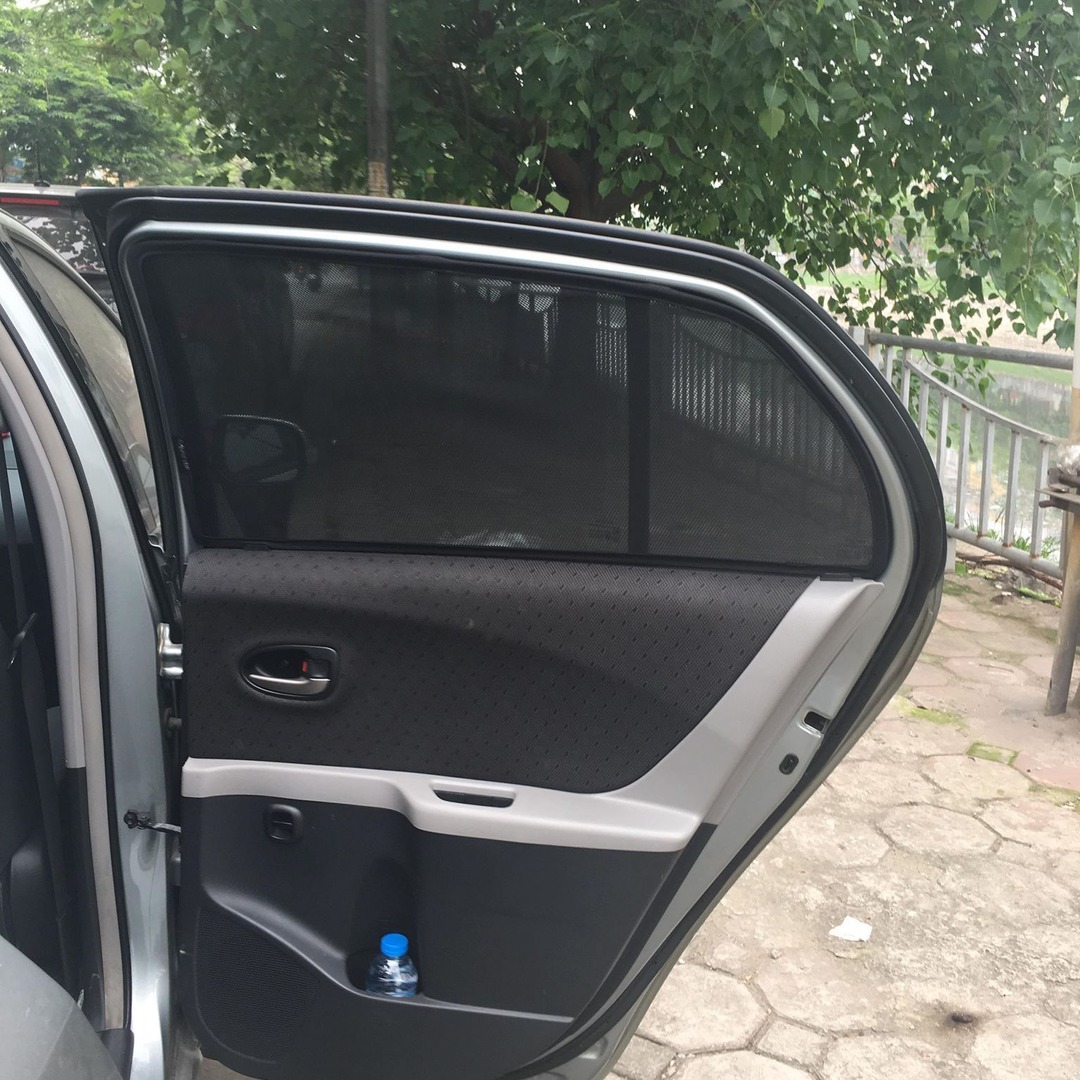
The Yaris listings
| What you have | Toyota's code | Listing years | Windows we cut | Product |
|---|---|---|---|---|
| Earlier Yaris hatch | XP90 | 2007–2012 | Front and rear doors, hatch glass | Yaris Hatchback 2007–2012 |
| Second Yaris hatch | XP130 (send a photo first) | 2013–2018 | Front and rear doors, hatch glass | Yaris 2013–2018 |
| Asian-market Yaris hatch | Not confirmed for the Australian car | 2019–2022 | Front and rear doors | Yaris 2019–2022 |
| Yaris sedan sold here | XP90 sedan | 2007–2013 | Front and rear doors | Yaris Sedan / Vios 2007–2013 |
Door pairs are $49.99 for the front and $59.99 for the rear, or $99.99 for all four. On both hatch listings that have it, the hatch glass panel is $59.99. It's $108.99 with the rear doors, $99.99 with the front doors, or $154.99 for all five windows. Most of these are made to order rather than sitting on the shelf. The Toyota Yaris page lists the hatch sets.
The 2007–2012 hatch
This is the rounder, upright Yaris that Toyota Australia sold from late 2005 until the next model arrived in late 2011. Our listing is labelled 2007–2012, the years the pattern was cut to. If you have a 2005 or 2006 build, send us a photo of a rear door before ordering. The body is the same generation, but we haven't had one of those years through the shop.
It's the only Yaris where we've sold the full five-piece set recently. The hatch glass is close to upright and faces whatever is behind the car, so if you park nose-in at the shops it takes the afternoon sun. The panel fits into the frame of each window. Some of these panels are on backorder at the moment, so allow extra time.
The 2013–2018 hatch, and where 2011 and 2019 cars fall
Toyota Australia's second Yaris hatch, the XP130, went on sale here in late 2011 and was sold until 2020. That means a Yaris registered in 2012, or one from 2019 into early 2020, is usually this body, even though neither year is in the listing's name. Go by the body, not the year on the listing. The compliance plate's build month settles it, and there's a longer guide to build dates and generations if you want the method.
This listing mounts by magnet and includes a hatch glass panel, which one of the three buyers this season added to the rear doors. Be aware that the workshop photos on the listing were taken on a Yaris hatch built for Asian markets, and we are still confirming the pattern against the Australian XP130. Until we have, send us a photo of your open rear door before you order. It costs you a message and saves a return.
The 2019–2022 listing is not the current Yaris
The Yaris sold new here from late 2020 is a different car, the XP210, on a new platform. Our 2019–2022 listing was cut on a Yaris hatch built for Asian markets in those years. Its photos show that car's door trim, not the XP210's, and we haven't confirmed it on an Australian XP210. So if you have a 2020-on Yaris, or a GR Yaris, don't order this set on the strength of the year alone. Check your build plate, send us a photo, or use the measuring app for a quote. A magnetic panel that nearly fits is one that lifts at the first bump.
The 2019–2022 set is doors only, with no hatch glass panel.
The Yaris sedan, and the Vios listings that aren't for Australian cars
The sedan Toyota Australia sold as the Yaris sedan is the XP90-based car, known elsewhere as the Vios or Belta. That's our Yaris Sedan / Vios 2007–2013 listing: front pair, rear pair or all four doors, with each panel fitting into the door frame.
The other four sedan listings carry the Yaris name because Toyota used it in some markets, but they're Vios bodies for Asia:
- 2003–2007: in Australia this was the Echo era, and we don't cut an Echo.
- 2013–2018, 2019–2023 and 2024–2025 (the Yaris Ativ): these Vios bodies were never sold new here.
If you own an imported one, those listings are the right cut. For an Australian-delivered Yaris sedan, the 2007–2013 set is the one to look at.
Gaps: what we don't cut
- Current XP210 Yaris hatch and GR Yaris, 2020 on: not confirmed, see above.
- Echo, 1999–2005: no listing, hatch or sedan.
- Yaris Cross: it's a separate car with its own set, covered in the small SUV guide.
Ordering
Hatch or sedan first, then the body.
- Upright XP90 hatch: the 2007–2012 listing.
- 2011 to early-2020 Australian hatch: the 2013–2018 listing, after you send us a photo of the rear door.
- Australian Yaris sedan: the 2007–2013 sedan listing.
- Current hatch: one to ask us about rather than buy blind.
The rear pair is the right start for almost everyone, and the guide to choosing which windows to cover explains why. The full Toyota list covers the rest of the range.
Ready to fit yours?
Custom-fit magnetic sun shades, made to your car's exact windows.
Can't find your car? Message your car model on WhatsApp