
The CX-3 and the CX-30 are one digit apart in name, both small Mazda SUVs. They get mixed up when people order, and the mix-up matters, because they are two different cars with two different sets of glass. A CX-3 set will not fit a CX-30, and a CX-30 set will not fit a CX-3.
Here is how to tell which one you have, and which listing it takes.
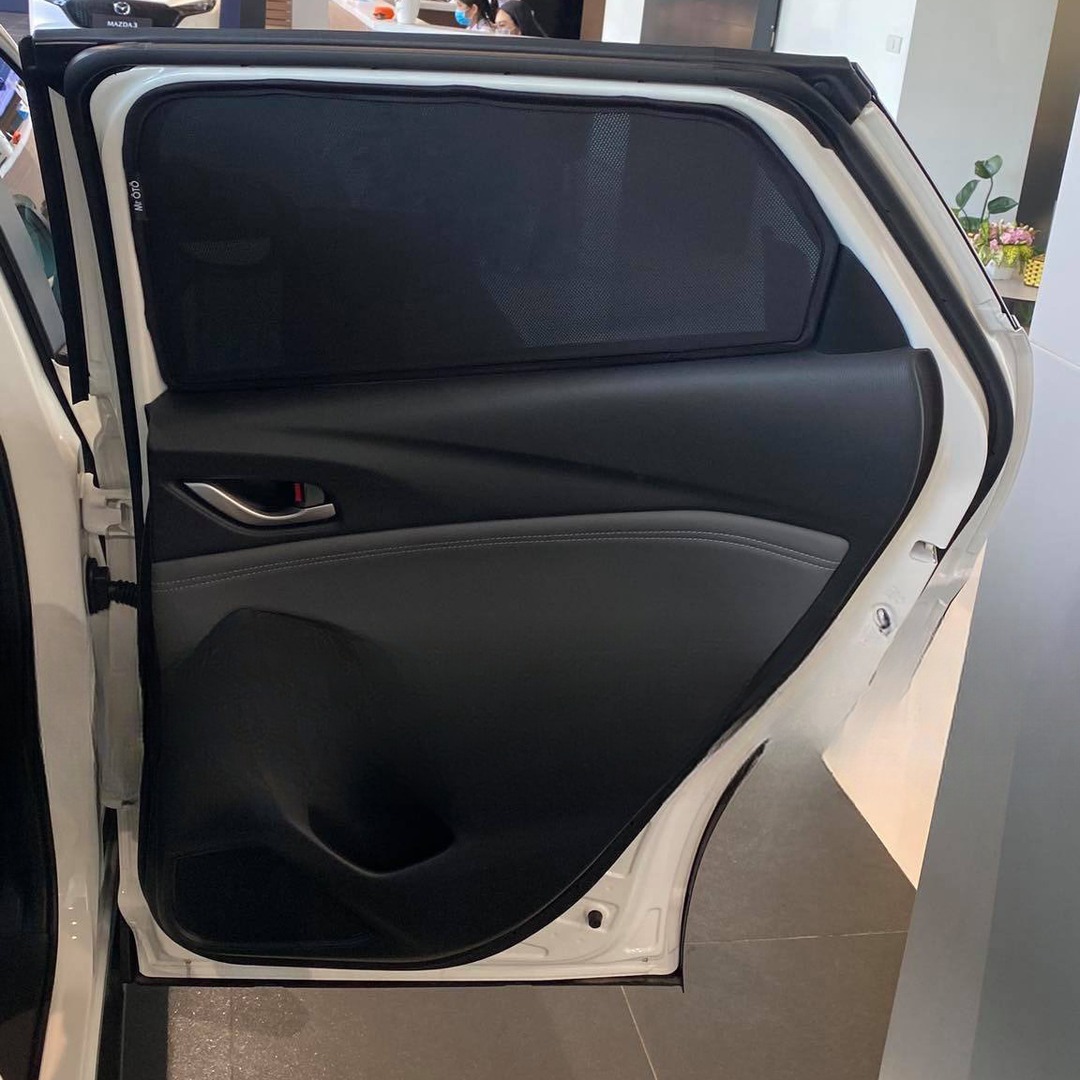
The two listings
| What you have | Mazda's code | Built | Windows we cut | Product |
|---|---|---|---|---|
| Mazda CX-3 | DK | 2015 on | Front doors, rear doors, tailgate | CX-3 |
| Mazda CX-30 | DM | Listing covers 2020–2026 | Front doors, rear doors, tailgate | CX-30 2020–2026 |
| Mazda CX-30 with a factory glass sunroof | DM | Listing covers 2020–2026 | Sunroof, one panel | CX-30 sunroof |
Prices are the same on both window listings: front pair $49.99, rear pair $59.99, all four doors $99.99, tailgate panel $59.99. Rear doors plus tailgate is $108.99, front doors plus tailgate is $99.99, and every door plus the tailgate is $154.99. The CX-30 sunroof panel is $49.99. Each car also has its own model page, CX-3 and CX-30.
How to tell them apart
The quickest check is the badge on the tailgate. If it says CX-3, you have the smaller car; if it says CX-30, the larger one. Rego papers and insurance documents give the model name too.
If the badge is gone or you are buying for someone else's car, it helps to know where each one comes from. The CX-3 arrived in Australia in 2015 and is built on the Mazda 2's underpinnings. The CX-30 is the newer car, built on the Mazda 3's, and is the bigger of the two. Mazda's own codes are DK for the CX-3 and DM for the CX-30; if one of those appears in your service records, that settles it. Our guide to working out which generation you have covers the build plate method if you want to be certain.
What does not work is going by size from memory or by the shape of the headlights. The two cars share Mazda's family look, and from the kerb they read as near relatives. The door glass is where they differ, and a panel cut for one aperture will leave gaps or not seat at all in the other.
The CX-3
The CX-3 has one listing and it carries no year range. We cut one pattern for the car, and the CX-3 has been sold here since 2015. The most recent CX-3 order was for a 2024 car, which took the full set: all four doors and the tailgate. Before that, a rear pair went to Victoria in August. If you have an early CX-3 and want to be sure, get in touch with the build date from the plate before you order.
The rear doors are where most people should begin. It is a small cabin, and the back seat sits close to glass that takes the afternoon sun. The four-door set is the next step, and the tailgate panel is worth adding if the car lives outside, since the CX-3's tailgate glass is the window right behind anything sitting in the boot.
Most CX-3 variants are currently made to order rather than on the shelf, so allow for that when you order.
The CX-30
The CX-30 listing covers cars from 2020 to 2026. Every CX-30 order we have had so far has been the rear pair on its own: three of them in September, going to SA, NSW and WA, for cars from 2021 to 2024. That is a fair summary of what the car is used for. It is a small family SUV, and the rear doors are where the children sit.
The rest of the CX-30 range is there if you want more: the four-door set, the tailgate panel, or the six-piece doors and tailgate set at $154.99.
The sunroof panel is a separate product and a different kind of shade: an insulated reflective panel rather than mesh, cut to the CX-30's roof glass as a single piece. It only fits a CX-30 that left the factory with a glass sunroof. Not every CX-30 has one, so check the roof before ordering. It is currently made to order.
The Mazda 3 is a separate listing
Because the CX-30 is built on the Mazda 3's underpinnings, people sometimes ask whether a Mazda 3 set will do. It will not. The Mazda 3 hatch and sedan have their own glass and their own listings, split by generation and, for some years, by body. The Mazda 3 guide sets them out.
What we do not cut
Neither listing includes a separate quarter window or port window set; we cut the doors and the tailgate on both cars. There is no sunroof panel listed for the CX-3, only for the CX-30. And the CX-3 is listed as a single pattern; we do not cut separate sets for early and late CX-3s.
If you have a Mazda small SUV that is not one of these two, the full Mazda list shows everything we cut for the brand, and if yours is not there, the measuring app is how we quote a new one.
Ordering
Badge first. CX-3 takes the CX-3 listing, whatever the year. CX-30 takes the CX-30 2020–2026 listing, plus the sunroof panel if the car has factory roof glass. A Mazda 3 is neither. The rear pair at $59.99 is the right place to start on both cars, and the guide to choosing which windows to cover explains why.
Ready to fit yours?
Custom-fit magnetic sun shades, made to your car's exact windows.
Can't find your car? Message your car model on WhatsApp